
What it is
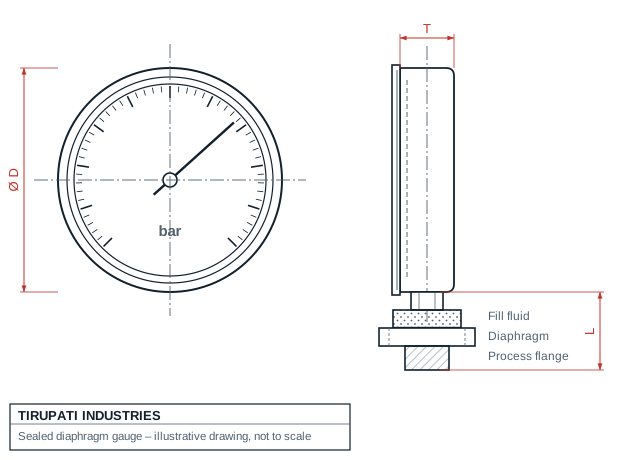
A sealed diaphragm gauge is a pressure gauge fitted with a diaphragm seal, also called a chemical seal. The process medium touches only the diaphragm, and the gauge itself is filled with a clean fluid.
We make flanged and threaded versions, and clamp-type versions for hygienic lines.
How it works
Pressure from the process moves the thin diaphragm. The movement is passed through the fill fluid to the sensing element of the gauge, which shows the reading on the dial. Because the medium never reaches the gauge, thick, crystallising, corrosive or very hot media can be measured without blocking the connection.
Where it is used
- Viscous, sticky or crystallising media
- Corrosive chemicals
- Paints, resins, pulp and slurries
- Food, dairy and pharmaceutical lines (clamp type)
- Hot media where the gauge must be kept cool
Things to consider
- The diaphragm material must suit the medium, so tell us what the medium is.
- Choose the connection to match the line: flanged, threaded or clamp.
- The fill fluid should suit the working temperature.
- Low pressure ranges need extra care, because the diaphragm adds a small error.
What to tell us for a quote
- Gauge type and dial size
- Pressure range and unit (bar, kg/cm², psi, kPa)
- Connection type and size
- Material of the wetted parts (CS, SS or SS 316)
- The medium and its working temperature
- Quantity and any special need
Questions about sealed diaphragm gauges
What is a diaphragm seal used for?
It separates the process medium from the gauge. It is used where the medium is corrosive, viscous, hot or likely to solidify and block a standard gauge.
Can I fit a seal to a gauge I already have?
Often yes, but the gauge, seal and fill fluid work as one system and are normally supplied and filled together.
Need sealed diaphragm gauges?
Send us the range, medium and connection and we will quote.